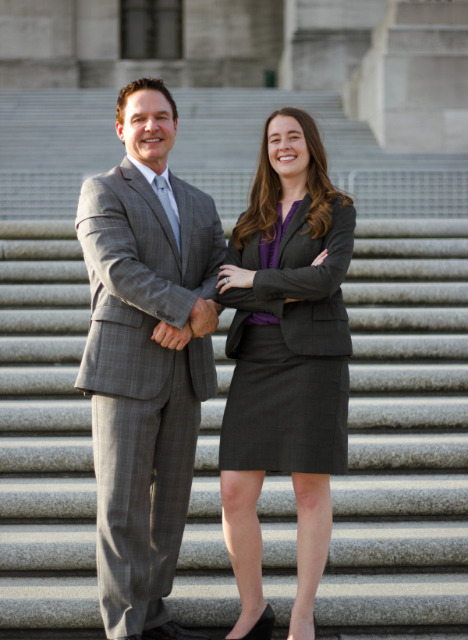
By Tommy Dewey, ACS-CHAL Forensic Lawyer-Scientist
When you've spent years on both sides of a DWI arrest, you learn exactly where the cracks in the system are.
Before I became a criminal defense attorney, I wore a badge. As a Sergeant with the Baton Rouge Police Department, I made hundreds of DWI arrests and administered countless field sobriety tests. I testified as the arresting officer in more courtrooms than I can count.
Now, I use that exact experience to defend you.
I'm not learning how officers build DWI cases from a textbook; I built them myself. What looks like an airtight case on paper often has serious weaknesses when you know where to look. At Dewey & Braud Law, we know how those cases are put together and more importantly, how to take them apart. If you were charged with a DWI in Louisiana, contact our DWI defense attorneys at (225) 953-8330.
Why My Background Matters for Your Defense
Most defense attorneys learn about police procedures from depositions and cross-examinations. I learned them from roll call, training, and years on the street.
As a certified SFST (Standardized Field Sobriety Test) practitioner, I was trained by the same programs that certify Louisiana's officers today. I know the exact protocol officers are supposed to follow and I know how often they cut corners.
As an ACS-CHAL Forensic Lawyer-Scientist, I've studied the chemistry and biology behind breath and blood testing at an advanced level. I understand partition ratios, gas chromatography, and the science that prosecutors hope you'll never question.
As a board member of the DUI Defense Lawyers Association, I stay connected to the cutting edge of DWI defense strategies nationwide.
This combination of cop, scientist, and legal advocate gives me a perspective that only a few attorneys can offer.
DWI Defense Strategies That Actually Work
1. Challenging the Traffic Stop Itself
The Fourth Amendment protects you from unreasonable searches and seizures. That protection starts the moment an officer's lights come on behind you.
What I look for:
- Did the officer have reasonable suspicion to initiate the stop?
- Was the stated reason (swerving, speeding, equipment violation) actually supported by dashcam footage?
- Did the officer extend the stop beyond what was legally justified?
From my experience: Officers sometimes initiate stops based on a "hunch" and then justify it after the fact in their reports. I know how police reports are written and can tell when the narrative doesn't match reality.
2. Exposing Field Sobriety Test Failures
The Standardized Field Sobriety Tests, including the Walk-and-Turn, One-Leg Stand, and Horizontal Gaze Nystagmus (HGN), are only reliable when administered exactly according to NHTSA standards.
Common failures I find:
- Improper instructions: Officers must give specific verbal instructions and demonstrate the tests. Skipping steps invalidates the results.
- Unsuitable testing conditions: Uneven pavement, poor lighting, traffic noise, or inclement weather all compromise test accuracy.
- Misinterpreted "clues”: Officers are trained to look for specific indicators, but many confuse nervousness, medical conditions, or fatigue with impairment.
- Physical limitations ignored: Age, weight, injuries, and footwear all affect performance. A 60-year-old with a bad knee may not be failing because of alcohol.
From my experience: I administered these tests for years. I know exactly how they should be done and that many officers take shortcuts that may compromise the evidence.
3. Attacking Breathalyzer Accuracy
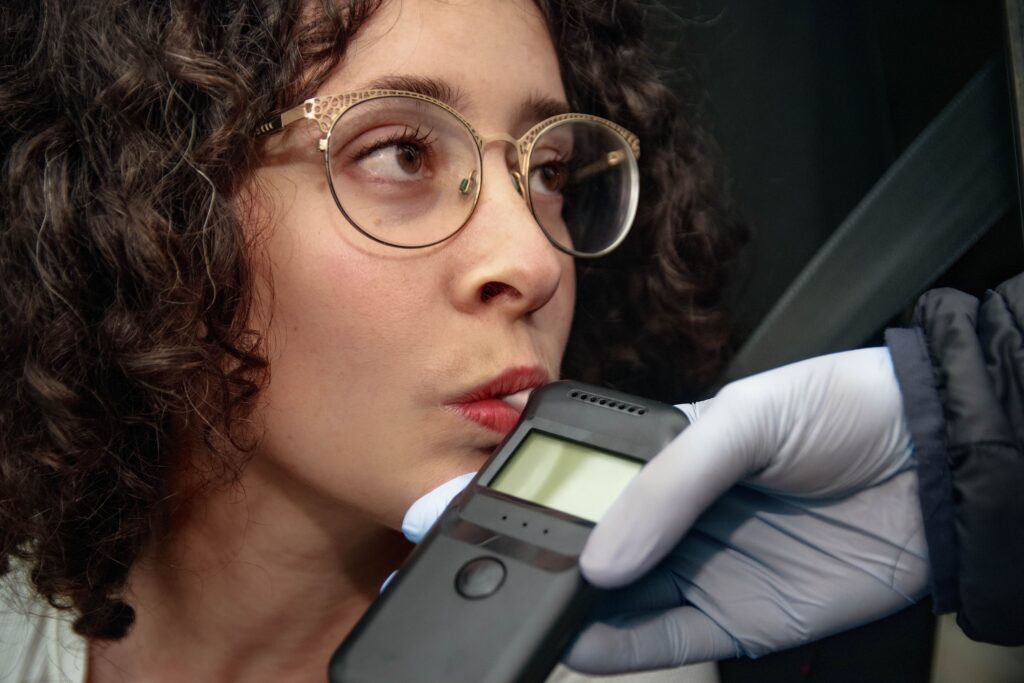
Louisiana primarily uses the Intoxilyzer 9000 for evidentiary breath testing. It's treated as scientific gospel in court, but it is still a machine with limitations and can make mistakes when not properly used.
What I investigate:
- Calibration and maintenance records: Was the device properly calibrated? Were maintenance logs complete?
- Operator certification: Was the officer certified to operate the device? Was their certification current?
- Observation period violations: Louisiana requires a 15-minute observation period before testing. If you burped, belched, or regurgitated during that time and the officer missed it, the result can be artificially inflated.
- Mouth alcohol contamination: Dentures, GERD, recent dental work, or even mouthwash can produce falsely high readings.
- Medical conditions: Diabetes, certain diets, and other conditions can produce acetone that the machine misreads as alcohol.
From my experience: Officers are often so focused on getting a number that they don't document the observation period properly. That can be a problem for the prosecution but an opportunity for the defense.
4. Challenging Blood Test Results
Blood tests are often presented as the "gold standard," but they're only as reliable as the process that produced them.
Critical questions I ask:
- Chain of custody: Can the state prove your blood sample was properly handled from draw to analysis?
- Proper preservation: Was the correct anticoagulant and preservative used? Was the sample refrigerated?
- Lab protocols: Was the testing method validated? Were quality controls acceptable?
- Fermentation: Improperly preserved blood can ferment, producing alcohol that wasn't there at the time of the draw.
- Measurement uncertainty: Every scientific measurement has a margin of error. Was it calculated and disclosed?
As a Forensic Lawyer-Scientist: I can read the raw chromatography data, not just the final report. I know what a clean separation looks like and what contamination looks like.
5. Questioning Officer Testimony and Reports
Police reports are written after the fact, sometimes hours later. Memory fades. Details get embellished or reconstructed to match expectations.
What I scrutinize:
- Does the report match the body camera and dashcam footage?
- Are the officer's observations specific, or do they use boilerplate language ("glassy eyes," "odor of alcohol," "unsteady on feet")?
- Has this officer used identical language in multiple unrelated arrests?
From my experience: I know the phrases officers are trained to use in their reports to describe what actually happened and when they’re simply checking boxes.
What Makes Louisiana DWI Cases Different
Louisiana has unique laws and procedures that require local legal guidance. For example, a criminal defense attorney with experience in DWI charges can better explain the:
- Felony thresholds: A third DWI offense within 10 years is a felony in Louisiana, with mandatory prison time.
- Enhanced penalties: BAC of 0.15% or higher, or having a minor in the vehicle, triggers significantly harsher consequences.
- Administrative hearings: You have only 30 days from arrest to request an OMV hearing to fight your license suspension. Miss that window, and you lose your right to challenge it.
- Parish-specific practices: Courts in East Baton Rouge, Ascension, Livingston, and surrounding parishes all have their own procedures and tendencies. Local knowledge matters.
The Bottom Line
A DWI arrest is serious, but it's not a conviction. The state has to prove its case, and that case is only as strong as the evidence supporting it.
When your attorney understands how that evidence was collected, how the tests were administered, and how the science actually works, the prosecution's "slam dunk" starts to look a lot less certain.
I've been on their side. Now I'm on yours.
Tommy Dewey is a Louisiana criminal defense attorney, retired Baton Rouge Police Department Sergeant, ACS-CHAL Forensic Lawyer-Scientist, and board member of the DUI Defense Lawyers Association. He represents clients facing DWI charges throughout the Baton Rouge area and South Louisiana.
Arrested for DWI? Contact Dewey & Braud Law at (225) 953-8330 today for a confidential consultation.