If you have been stopped for suspected DUI in Louisiana, there is a good chance an officer asked you to perform the Horizontal Gaze Nystagmus (HGN) test. This eye test is one of the most commonly used field sobriety tests, yet it is also one of the most misunderstood. Many drivers assume failing the HGN test automatically means a DUI conviction, but that is not how the law works.
At Dewey & Braud Law, our DWI Lawyers regularly defend clients in Baton Rouge who were arrested after an HGN test. Understanding how the test works, its limitations, and how it can be challenged is critical if you are facing DWI charges.
What Is the Horizontal Gaze Nystagmus Test?
The Horizontal Gaze Nystagmus test is designed to detect involuntary jerking of the eyes as they move from side to side. It is believed that alcohol and certain drugs can exaggerate this eye movement, especially when the eyes follow an object horizontally.
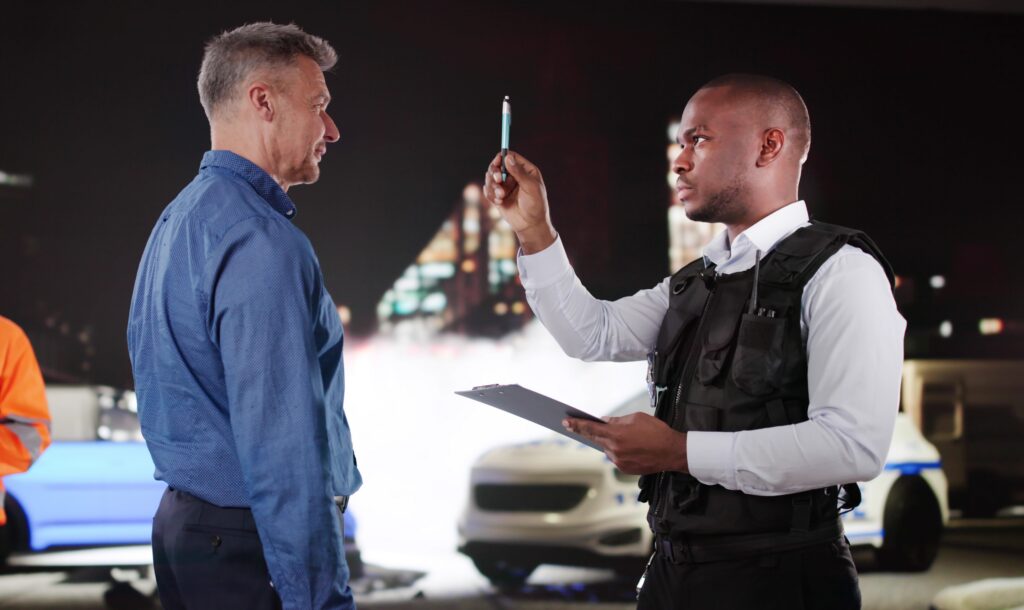
During a DUI stop, an officer may ask you to follow a pen, flashlight, or finger with your eyes while keeping your head still. The officer then looks for specific “clues” that are supposed to indicate impairment. Unlike other field sobriety tests, the HGN test does not measure balance or coordination, only eye movement.
How Officers Administer the HGN Test: The Standard Steps
According to standardized field sobriety testing guidelines, officers are trained to follow a specific process when administering the HGN test. The typical steps include:
- Positioning the stimulus slightly above eye level and about 12 to 15 inches from the face
- Checking for equal pupil size and equal tracking in both eyes
- Slowly moving the object side to side to observe smooth pursuit
- Holding the stimulus at the far edge of vision to check for sustained nystagmus
- Moving the stimulus slowly to determine the angle at which nystagmus begins
If these steps are not followed precisely, the results may be unreliable. Even small deviations in speed, distance, lighting, or positioning can affect what the officer thinks they see.
Why the HGN Test Results Can Be Unreliable
Although law enforcement often treats the HGN test as scientific, it is far from foolproof. Many factors unrelated to alcohol or drug use can influence eye movement and lead to false positives.
Medical Conditions and Natural Nystagmus
Some people naturally exhibit nystagmus without being impaired. Others may have medical conditions that affect eye movement, including:
- Inner ear disorders
- Neurological conditions
- Eye muscle issues
- Head injuries or concussions
- Certain vision impairments
In many cases, officers do not ask about medical history before administering the test, which can lead to inaccurate conclusions.
Environmental Factors and Officer Error
The roadside environment is rarely ideal for conducting a precise eye exam. Factors that can interfere with HGN testing include:
- Flashing police lights
- Passing traffic and headlights
- Poor lighting conditions
- Uneven ground or distractions
- Officer fatigue or improper training
If the officer moves the stimulus too quickly, holds it at the wrong angle, or fails to properly observe both eyes, the test results may not be valid.
What Drugs Cause HGN? It’s Not Just Alcohol
While alcohol is commonly associated with HGN, it is not the only substance that can cause eye jerking. Certain prescription and over-the-counter medications can also produce similar effects, including:
- Anti-seizure medications
- Sedatives and sleep aids
- Anti-anxiety medications
- Some antidepressants
- Motion sickness medications
Additionally, fatigue, stress, and even caffeine can affect eye behavior. This is one reason HGN results alone should never be treated as definitive proof of intoxication.
Can You Challenge HGN Results in a Baton Rouge Court?
Yes. HGN test results can be challenged in Louisiana courts, and they often are. At Dewey & Braud Law, we carefully examine how the test was administered and whether it meets legal and scientific standards.
Common defense strategies may include:
- Demonstrating that the officer did not follow standardized procedures
- Questioning the officer’s training and experience with HGN testing
- Highlighting medical or environmental factors that explain the eye movement
- Arguing that HGN results were improperly relied upon without corroborating evidence
HGN test results are only one piece of the prosecution’s case. They must be supported by additional evidence because if the test is flawed, it can weaken the entire DWI charge.
Contact a Baton Rouge DWI Defense Lawyer Today
If you were arrested after taking an HGN test during a DUI stop, you should not assume the results are accurate or unbeatable. These cases are complex, and early legal guidance can make a meaningful difference.
Dewey & Braud Law represents individuals facing DWI charges throughout Baton Rouge and surrounding areas. We understand how field sobriety tests are used and misused, and we know how to challenge unreliable evidence. Contact us at (225) 953-8330 to schedule a free consultation and discuss your defense options.